FAQ
Dog training questions, answered honestly
The questions people ask before they trust a trainer — including the ones with uncomfortable answers.
Getting started
I don’t know which program I need. Where do I start?
Start with the problem, not a package name. The Training Match asks a few questions about your dog and your goals, and we use it to recommend a starting point. At your free evaluation, your trainer will go over your goals and the plan.
Is the evaluation free? What happens at it?
Yes, the in-person evaluation is free. Your trainer will discuss your training goals, your dog’s history and what daily life looks like, then recommend a starting point and explain why.
Is my dog too young or too old to train?
There’s no such thing. Dogs of any age can learn — and sometimes more mature dogs are easier to train because they have less energy. Whether you have an 8-week-old puppy or a 10-year-old shelter dog, the outcome depends on many factors, none of which is age.
When are you open?
Tuesday through Saturday, by appointment only. Call (408) 482-2846 or book a free evaluation online.
Where does training happen?
Our base is 1089 Memorex Dr in Santa Clara. Real-world proofing — the step where skills meet actual distractions — may happen in public places that match your goals.
Methods
Do you use food in training?
Yes. Food is what behavior professionals call a primary reinforcer — rewarding in itself because it’s necessary for survival — and it’s instant gratification for your dog. It isn’t the only reinforcement tool we use, but it’s often the easiest and most powerful.
Will my dog need food forever?
No. Once a dog has mastered a behavior thoroughly, food is no longer necessary (though it’s always appreciated).
My dog doesn’t like food. Can they still be trained?
Yes. Some dogs aren’t food-obsessed, and that can be beneficial in some ways. It means understanding what makes your dog tick and thinking outside the box — it isn’t insurmountable.
What training tools do you use?
Tools are chosen for the individual dog and explained before they’re used. Food is one of several reinforcers. Ask us anything — you should always understand what’s being used on your dog and why.
Do I need to be involved?
Yes — it’s essential. We’ll show you what your dog is capable of, but your active participation is what makes the change last. Much of our work is coaching the human end of the leash.
Behavior & safety
Can you guarantee my dog will be trained?
No. Trainers can’t control every factor, and guaranteeing results would be unethical. A dog’s history, socialization, genetics, experiences and the owner’s follow-through all play significant roles. Complex behaviors like aggression, reactivity, resource guarding and separation anxiety require ongoing commitment.
My dog has bitten someone. Can you still help?
Often, yes — and it’s important to tell us up front so we can plan a safe first session. In the meantime, manage carefully: avoid situations that led to the bite, separate people and animals when you can’t supervise, and talk to your veterinarian.
What’s the difference between a trainer and a veterinary behaviorist?
Veterinary behaviorists are veterinarians who can diagnose medical and behavioral conditions and prescribe medication. Behavior modification training is the day-to-day work of changing how your dog responds. They often work together.
Programs & cost
Is training private or in groups?
Both. Current packages pair private sessions with group sessions — private time to build skills around your dog’s needs, group time to practice around other dogs and people.
How much does training cost?
Packages run from $799 for 8 private sessions and 4 group classes to $1,899 for 24 private sessions and 12 group classes, and stay valid for 5 years. Group classes are $45 drop-in, $200 for 5 or $349 for 10. We recommend a package after your free evaluation so you’re not guessing — see the pricing page for everything.
Can you certify my service dog?
No one can. Under the ADA there is no official certification or registry for service dogs. Our service dog training focuses on obedience, socialization, public manners and task training.
Do you work with tactical units or specialty teams?
Yes. Advanced Tactical & Specialty Training (under Programs) is for advanced dog-handler teams: advanced obedience, handler mechanics, environmental confidence, obstacle and distance work, drive and engagement, scent and search foundations, and specialty skills. Not every dog is suited to every form of advanced work, so suitability is evaluated individually. The specialty team evaluation is free: request it on the program page, or call (408) 482-2846.
Why does my puppy pee as soon as they come inside?
House training depends on complete supervision. Go outside with your puppy so you know whether they’re “empty or full” when they come back in, and restrict access around the house until house training is complete.
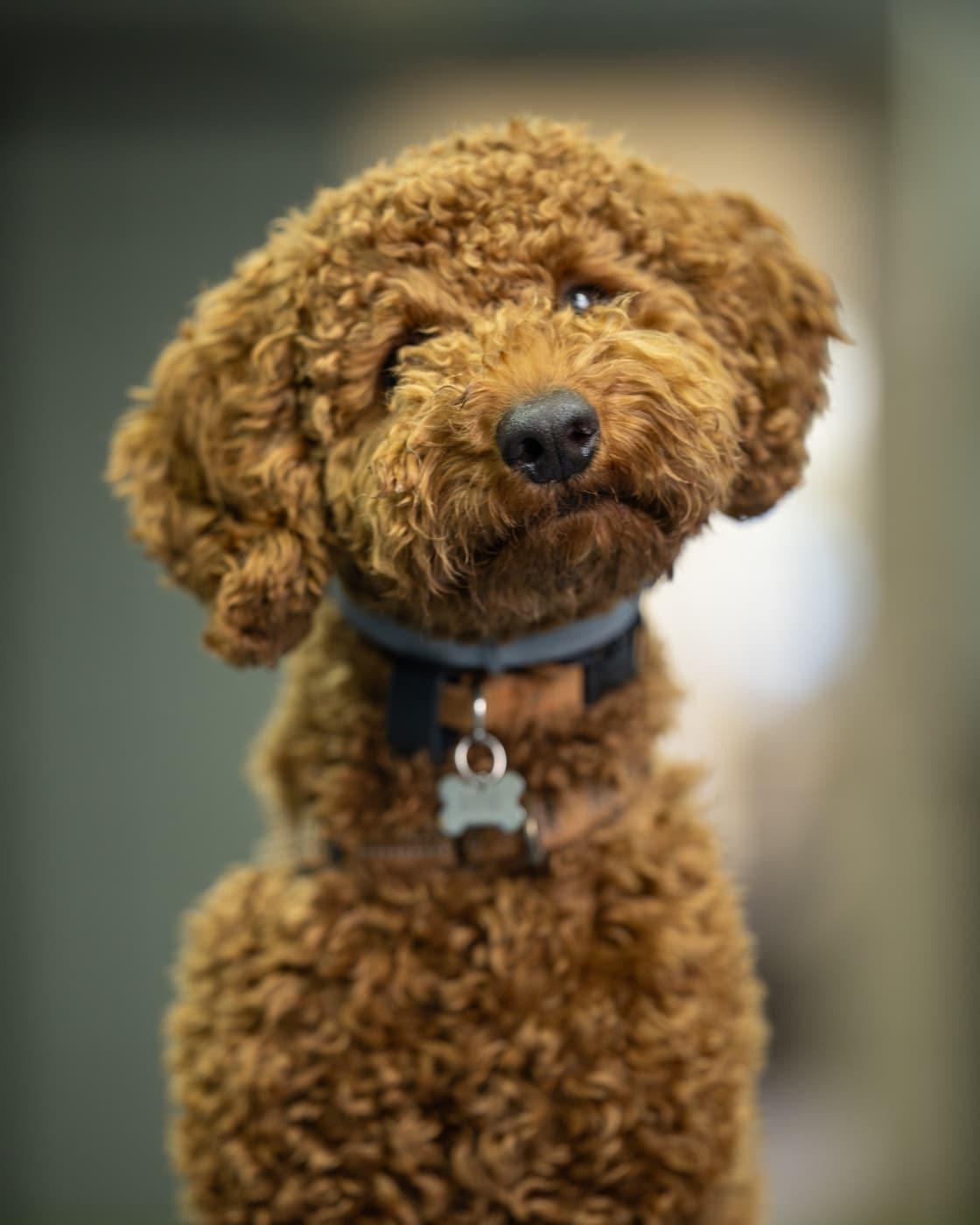
Free · In person
Start with a free evaluation.
Bring your dog, meet a trainer and talk through what’s going on. Your trainer recommends a plan — and explains why — before you pick a package.
- Cost
- Free
- Where
- In person, with your dog
- When
- Tuesday–Saturday, by appointment only
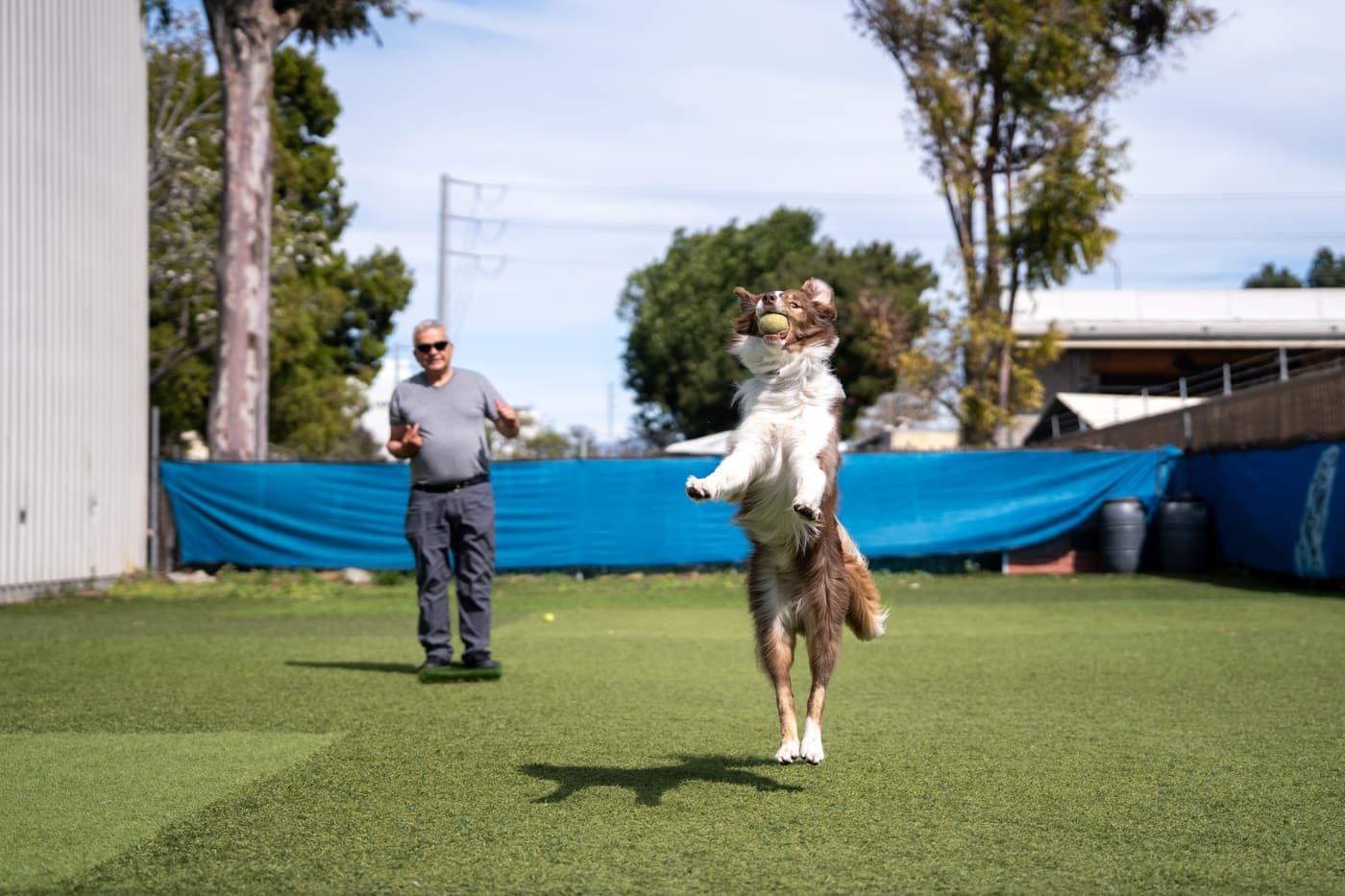
Private field rental
No backyard? Rent our field.
Half an acre of fenced turf behind our Santa Clara facility, yours by the hour through Sniffspot.
Rated 4.9 out of 5· 1,700+ reviews on Sniffspot