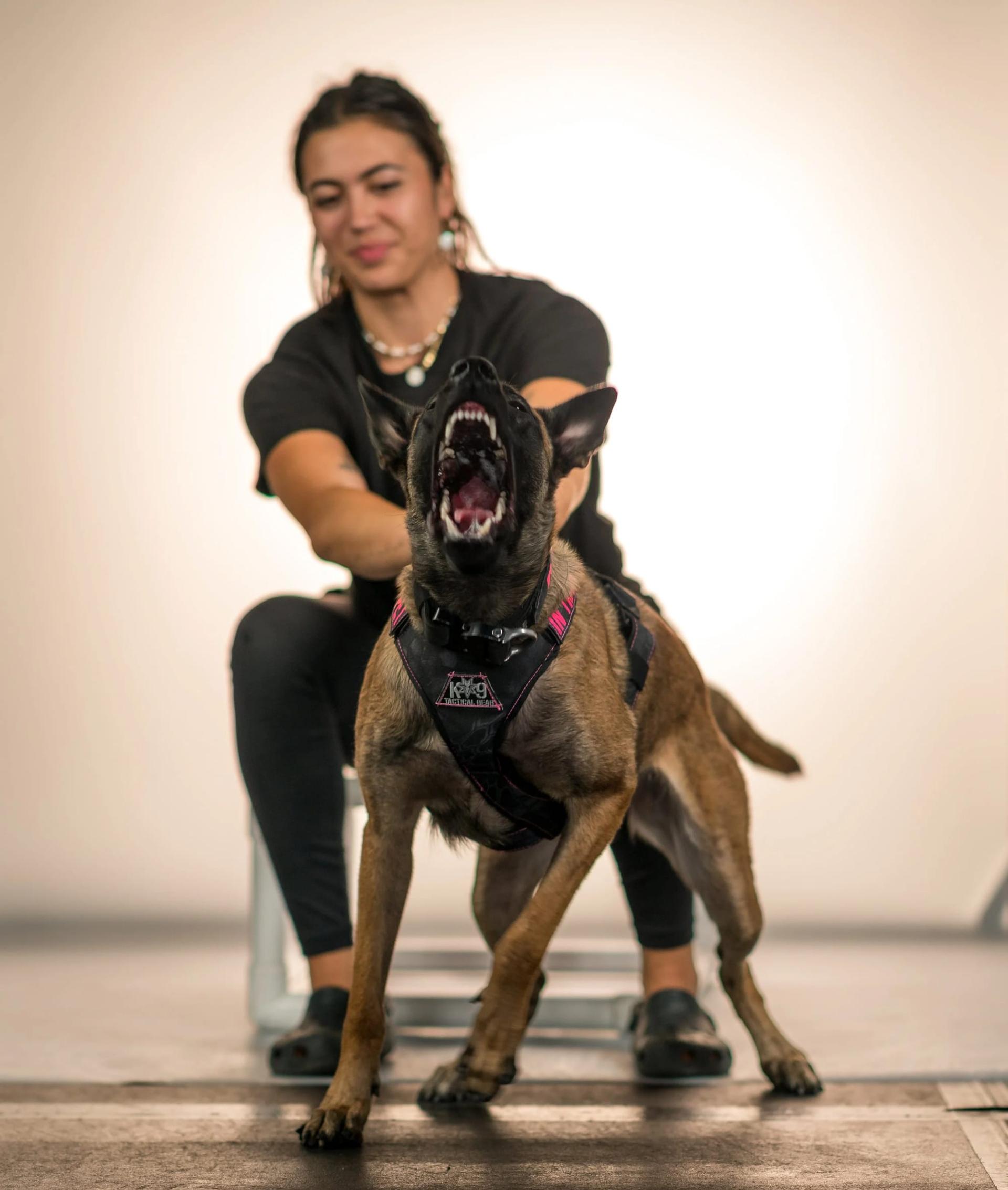
A Belgian Malinois in a harness barking as its handler holds it from behind

Advanced Tactical & Specialty Training

Tactical & Specialty Team Dog Training

Precision. Control. Communication under pressure.

Some dogs need more than everyday obedience. They need to work through movement, distance, pressure, environmental change, complex cues, and high-distraction situations with clarity and control.

01Built for the team

Built for the team, not just the dog.

Advanced training depends on both ends of the leash.

Bay Area K9’s Tactical & Specialty Team Training is designed for advanced dog-handler teams that need structured, performance-focused development beyond foundational obedience.

Whether the goal is advanced handling, sport foundations, specialty task work, environmental confidence, controlled movement, or higher-level team communication, training is built around the individual dog, the handler, and the demands of the work ahead.

Handlers learn how to communicate clearly, manage timing, use body position effectively, reinforce the right behavior, and maintain consistency as difficulty increases.

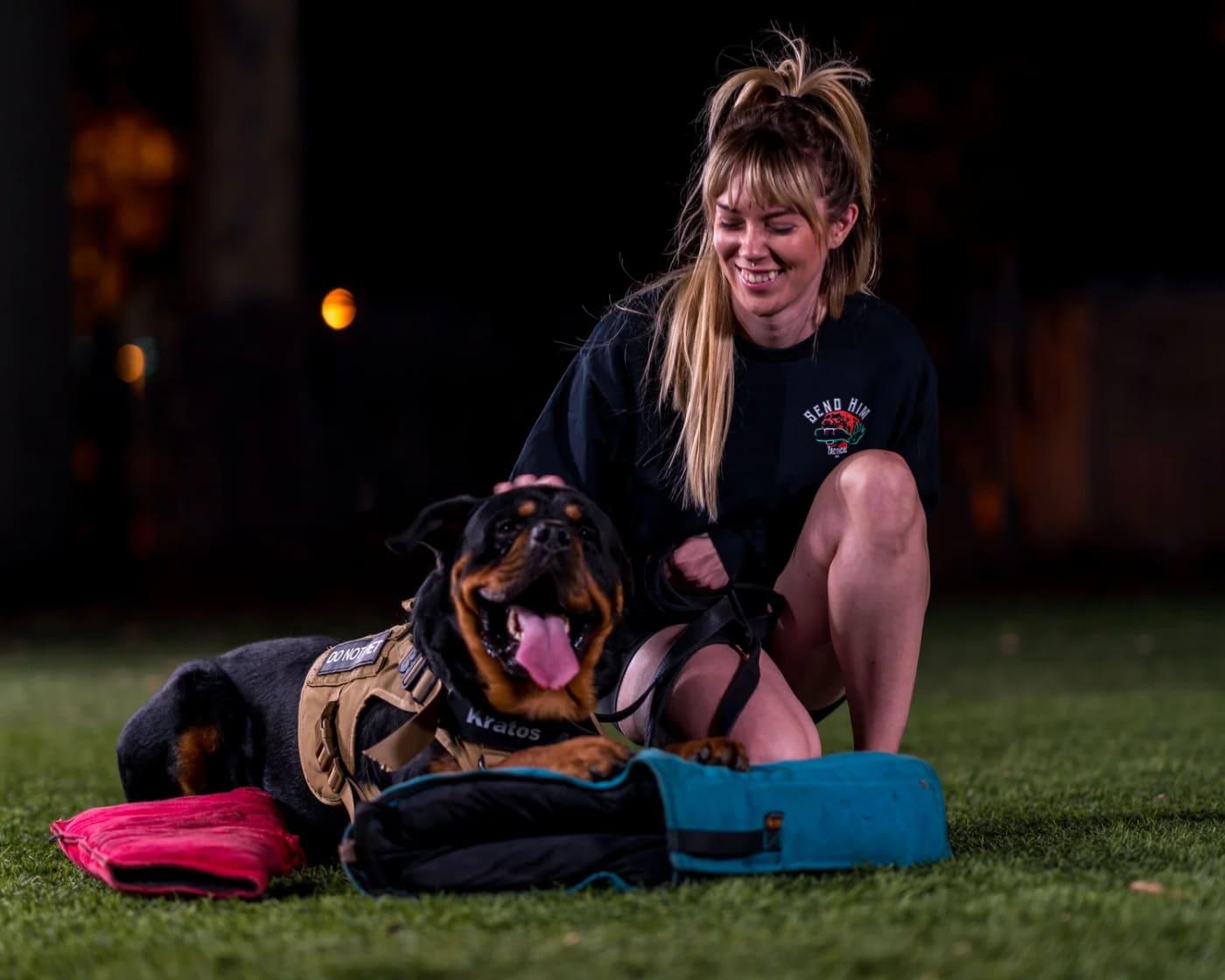
A handler sitting on the field at night beside her Rottweiler, who wears a tactical vest, with training gear on the grass

Dogs learn to work with greater reliability across

  • Distance
  • Duration
  • Distraction
  • Movement
  • Changing environments
  • Equipment
  • Novel surfaces
  • Pressure
  • Handler direction

The goal is not simply a dog that knows more commands.

The goal is a team that can perform together with greater clarity, confidence, and control.

02The work

Training may include

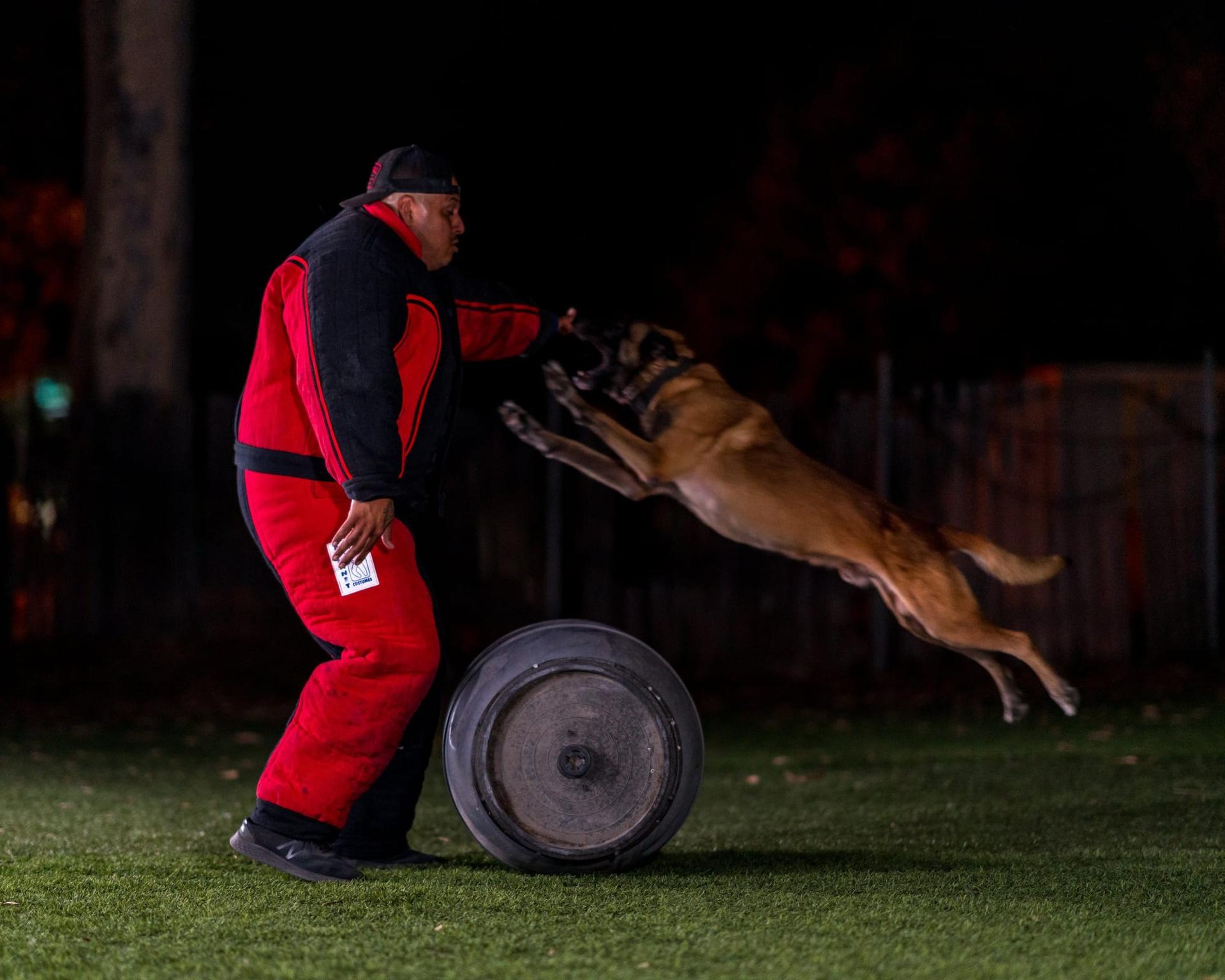
A Belgian Malinois leaping toward a decoy in a red bite suit on the training field at night
Decoy work, on the field at night
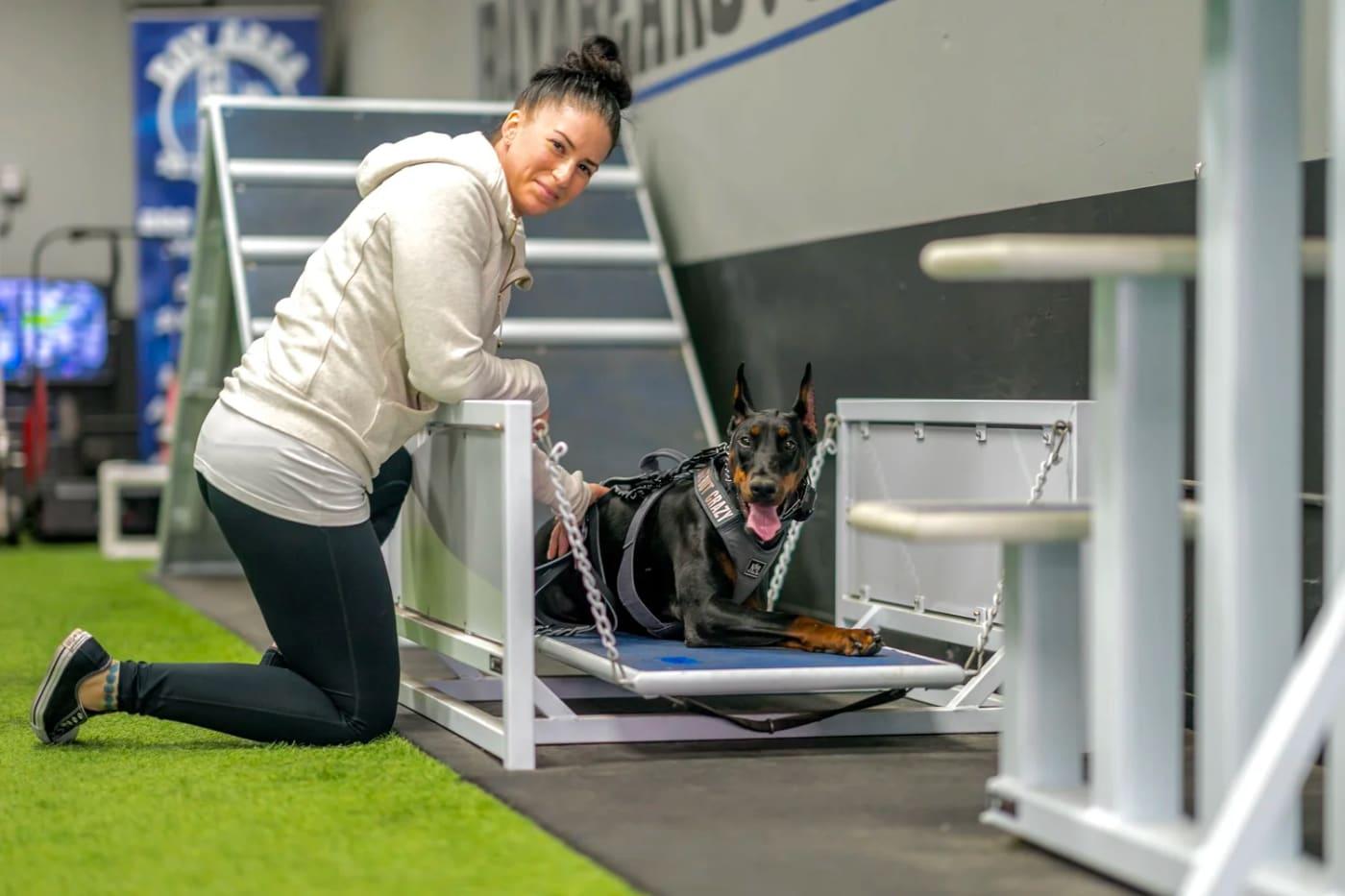
A handler kneeling beside a black-and-tan dog lying on a training ramp inside the facility
Obstacle & movement work
  • Advanced Obedience

    Building stronger reliability around known behaviors under increased distraction, distance, movement, and environmental pressure.

  • Handler Mechanics

    Developing cleaner timing, body positioning, leash handling, reinforcement, movement patterns, and communication.

  • Environmental Confidence

    Working through unfamiliar surfaces, confined spaces, noise, elevation, equipment, vehicles, crowds, and changing surroundings.

  • Obstacle & Movement Work

    Developing confidence, coordination, body awareness, directional control, and safe movement through structured obstacles.

  • Distance Control

    Strengthening cues and responsiveness when the handler is no longer directly beside the dog.

  • Drive & Engagement

    Channeling energy, motivation, play, food, toys, movement, and natural drive into purposeful work with the handler.

  • Scent & Search Foundations

    Introducing structured search behaviors, target odor concepts, indication foundations, and handler observation where appropriate to the team’s goals.

  • Specialty Skill Development

    Individualized exercises may be developed around the dog-handler team’s specific performance goals and suitability.

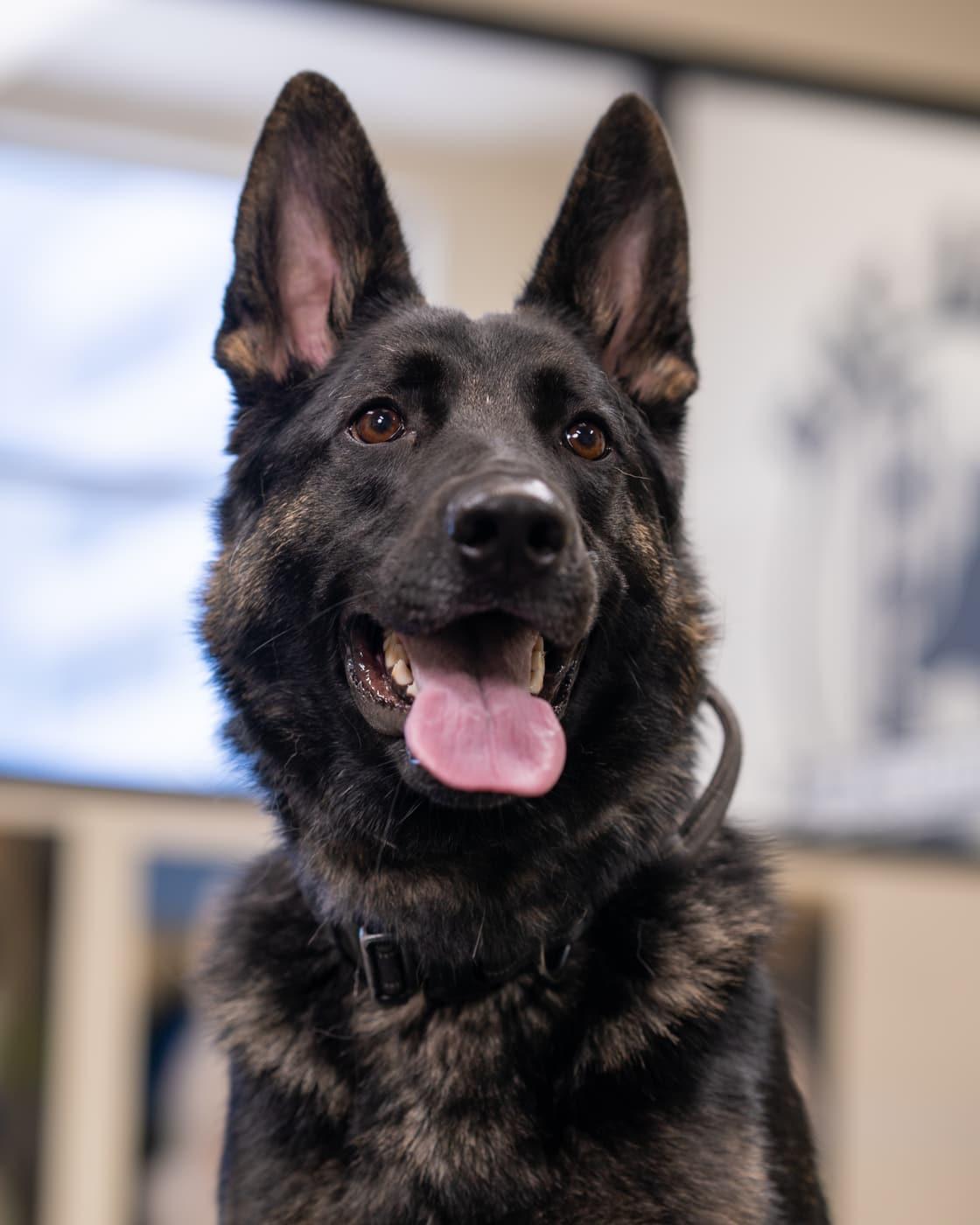
A dark German Shepherd, ears up, looking straight at the camera

03Foundations

Performance begins with foundations.

Specialty work does not replace foundational training. It exposes weaknesses in it.

Before introducing advanced exercises, we evaluate the dog’s

  • Engagement
  • Obedience
  • Recall
  • Impulse control
  • Environmental confidence
  • Handling tolerance
  • Motivation
  • Recovery
  • Neutrality
  • Communication with the handler

From there, the training plan is built progressively.

Strong teams are not created by rushing to advanced exercises. They are created by making the fundamentals reliable enough to support them.

04Six stages

Training progression

  1. 01

    Evaluate

    Assess the dog, handler, existing skills, motivation, environmental comfort, and training goals.

  2. 02

    Build

    Strengthen communication, engagement, obedience, handler mechanics, and foundational control.

  3. 03

    Introduce

    Add new environments, equipment, movement patterns, obstacles, specialty exercises, or task foundations.

  4. 04

    Pressure Test

    Increase distance, distraction, duration, environmental complexity, and handler independence.

  5. 05

    Refine

    Improve precision, timing, reliability, recovery, and consistency.

  6. 06

    Transfer

    Ensure the handler can reproduce the work without constant trainer intervention.

05Who it’s for

Who this training is for.

Tactical & Specialty Team Training may be appropriate for:

Not every dog is appropriate for every form of advanced work. Suitability is evaluated individually.

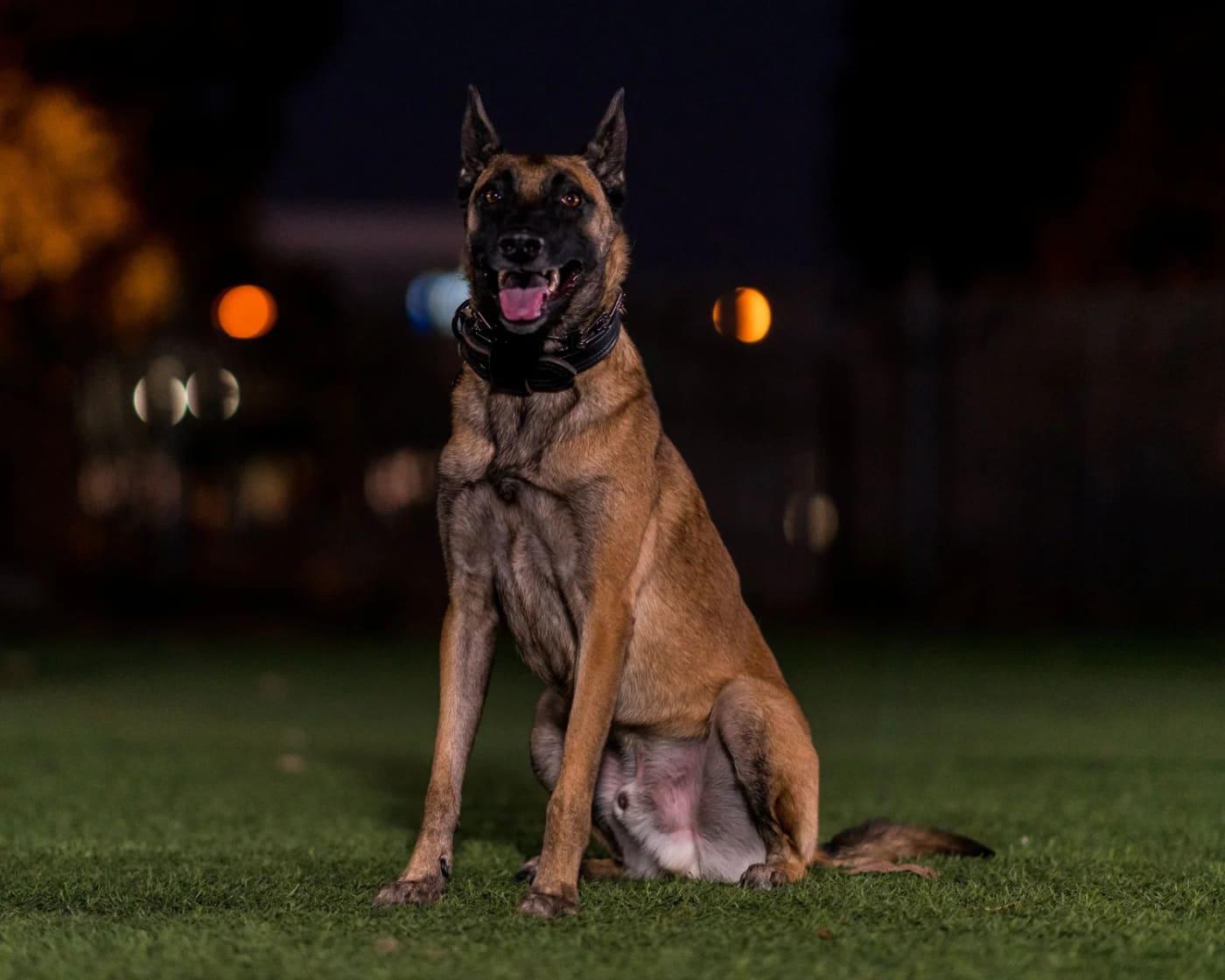
A Belgian Malinois sitting on the training field at night, city lights behind
  • Advanced obedience teams
  • Working-breed owners
  • Sport-dog teams
  • High-drive dogs
  • Handlers seeking greater precision
  • Dogs progressing into specialty work
  • Teams preparing for advanced environments
  • Experienced owners looking for more challenging training
  • Suitable dogs developing scent, search, agility, or task foundations
  • Is your team a fit?

    Request a free specialty team evaluation

What we do not believe in

More intensity does not automatically create better performance.

Neither does adding harder equipment, stronger pressure, or more complicated exercises before the dog understands the foundation.

Advanced work should develop

  • Clarity before speed
  • Control before complexity
  • Confidence before pressure
  • Communication before correction

That philosophy guides the entire program.

06The Bay Area K9 difference

There is no universal tactical template.

Bay Area K9 approaches every dog-handler combination as a unique team.

Breed, temperament, experience, motivation, physical ability, handler skill, environment, and the intended application all influence how training progresses.

That allows us to build advanced training around the dog in front of us — not around a predetermined checklist.

“…if you have a working breed, Steve specializes in Malinois so you couldn't find a better spot. My mal Mack and I have worked with Steve quite a bit this year and the improvement had been incredible, he's developed everything from his bite & protection work, advanced off leash obedience, to scent tracking.”
Matt B.

via Google (opens in a new tab)

Individual experience. Results vary.
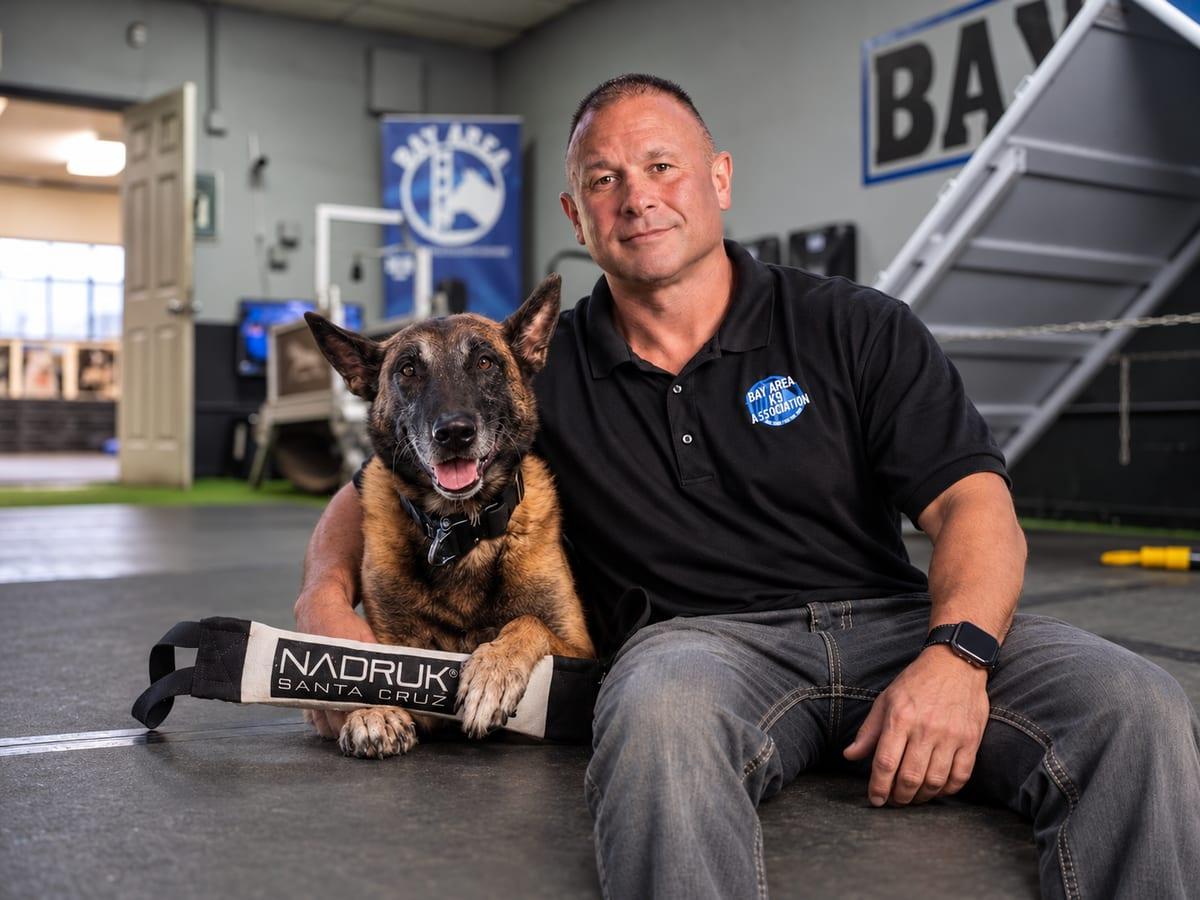
About Steve Kenzler and Bay Area K9
Steve Kenzler sitting on a training-room floor with a Belgian Malinois, Bay Area K9 banners on the wall behind them
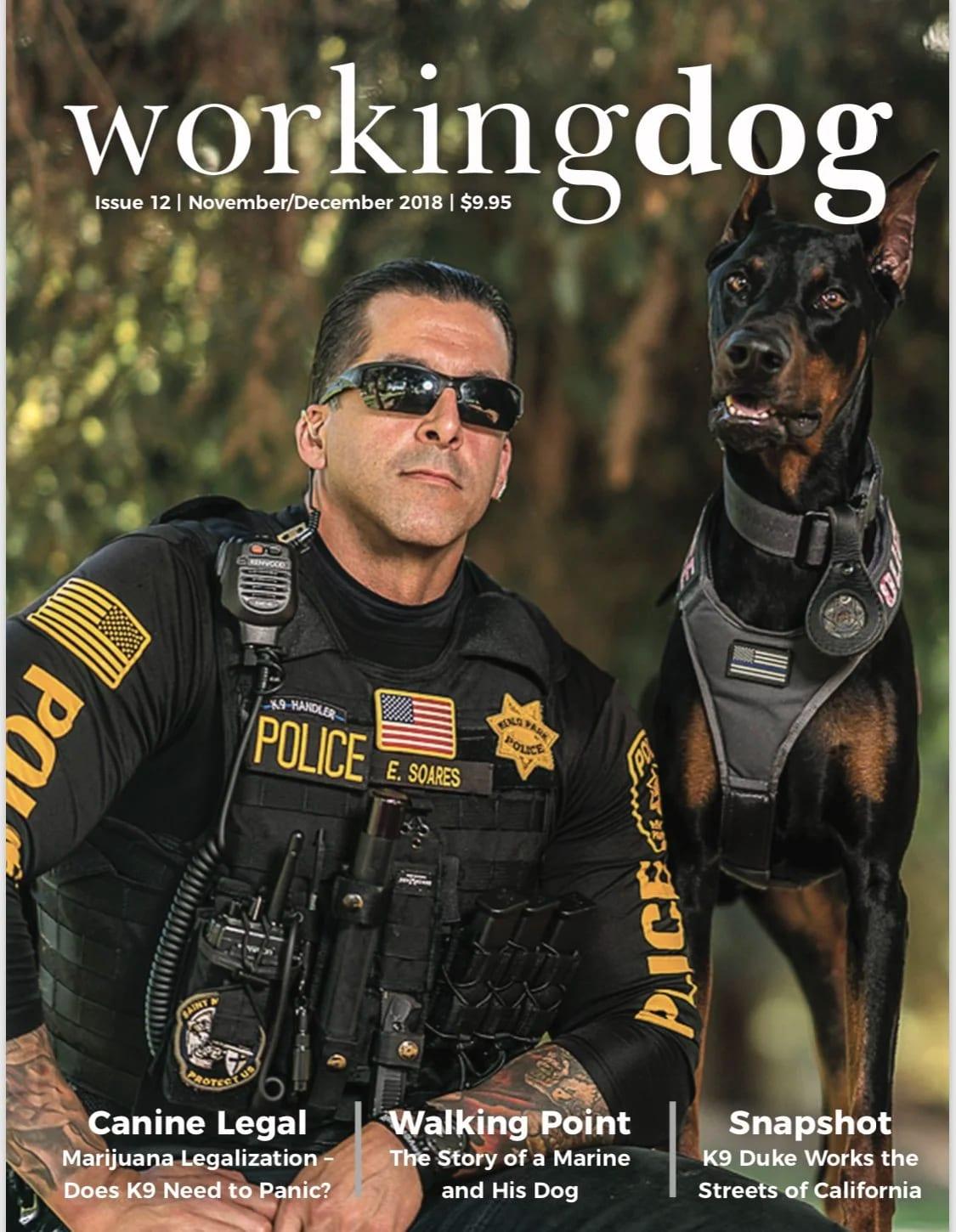
Working Dog magazine cover, Issue 12, November/December 2018: Sgt. Ed Soares of the Menlo Park Police in uniform beside K9 Duke, a Doberman in a police harness

Feature · Menlo Park Police

Sgt. Ed Soares & K9 Duke

The AKC credits The Bay Area K9 Association with giving Duke “the foundation for his obedience, tracking, and detection skills.” He went on to serve as a certified narcotics detection K9.

Started here at
12 weeks
K9
Duke, a Doberman Pinscher
Honored
2017 AKC Award for Canine Excellence
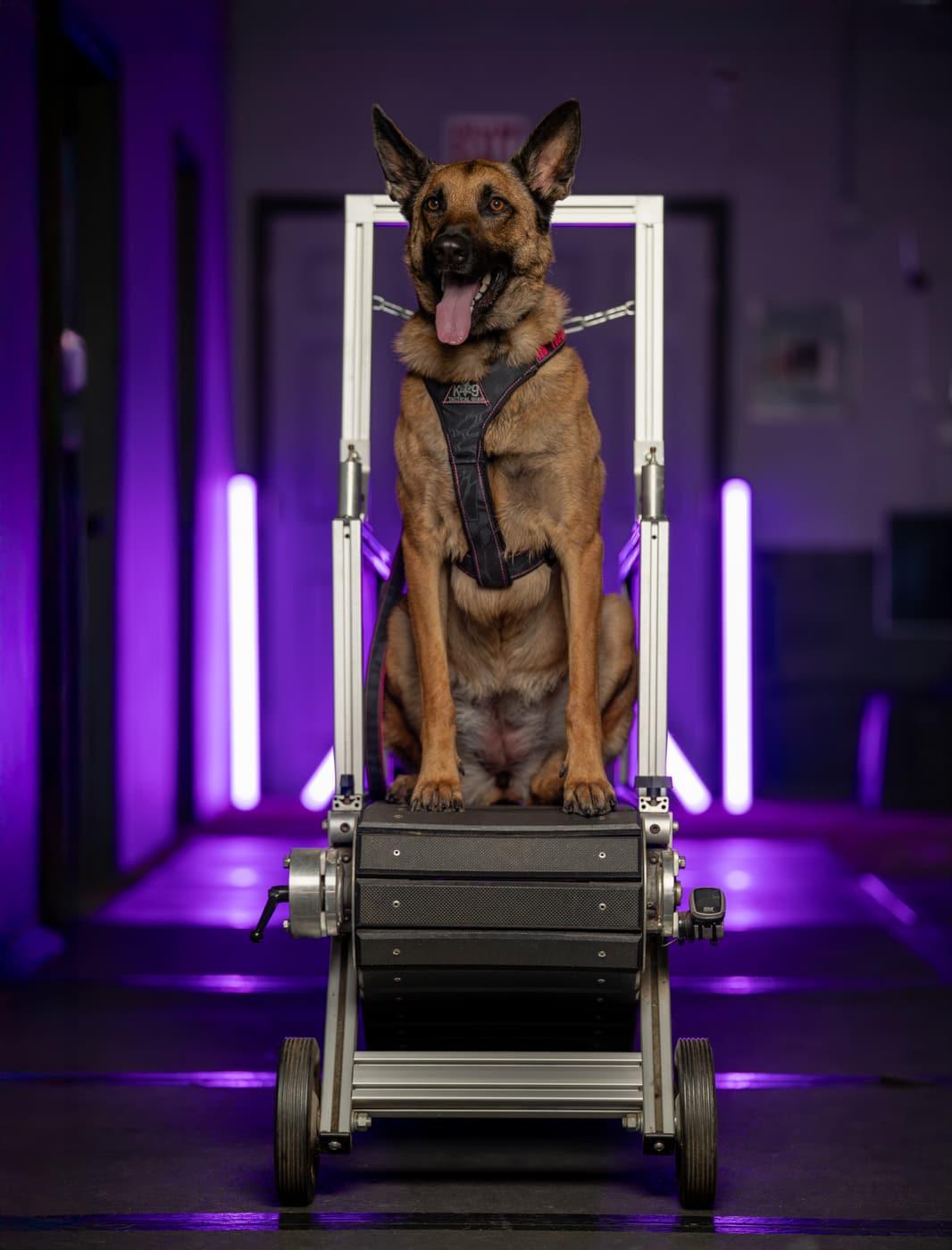
A Belgian Malinois standing on a raised training ladder under purple light

Bay Area K9 Association

Train beyond obedience.

  • Develop stronger communication.
  • Build greater reliability.
  • Challenge the team.
  • Refine the details.

Advanced training for dogs and handlers ready for the next level.

Cost
Free
Where
In person, with your dog
When
Tuesday–Saturday, by appointment only
Rather talk it through? (408) 482-2846

Free evaluation

Specialty team

Request your free specialty team evaluation

Used only to respond to this request.

Breed and age, e.g. 3-year-old Belgian Malinois.

What are you working toward?

By sending, you agree we may contact you by phone, text or email about this request. We don’t sell your information. Privacy

Free · about 2 minutes · no commitment

Private field rental

No backyard? Rent our field.

Half an acre of fenced turf behind our facility — room to train at a distance — open to book by the hour on Sniffspot.

Book on Sniffspot(opens in a new tab)

Rated 4.9 out of 5· 1,700+ reviews on Sniffspot

Book a Free Evaluation Call